World models, learned from recordings
Give your agents
a place to practise.
Simulusion learns how your world behaves from the recordings you already have. Your agents make their mistakes in there, not on your hardware.
Built forRoboticsGamesAgentsEvals
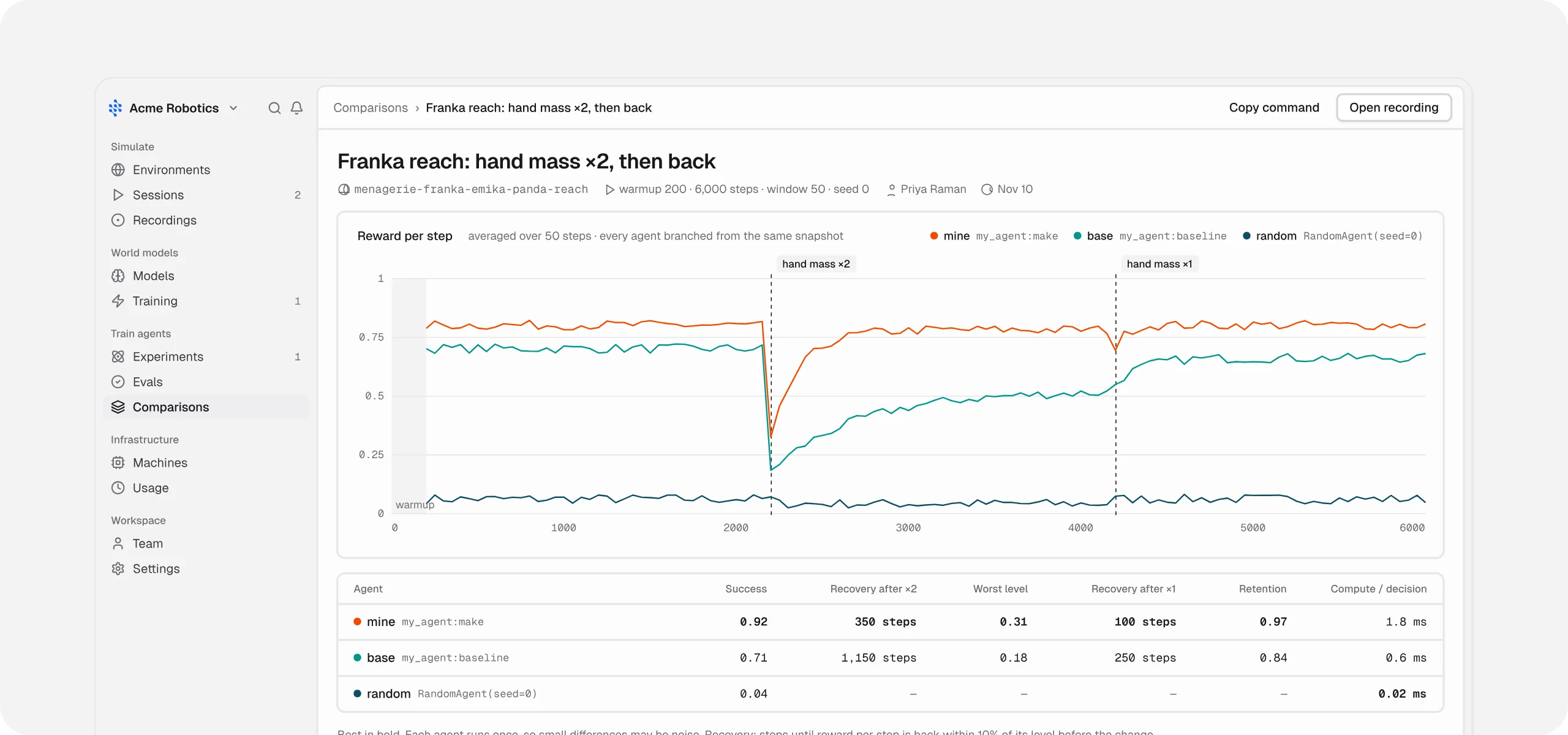
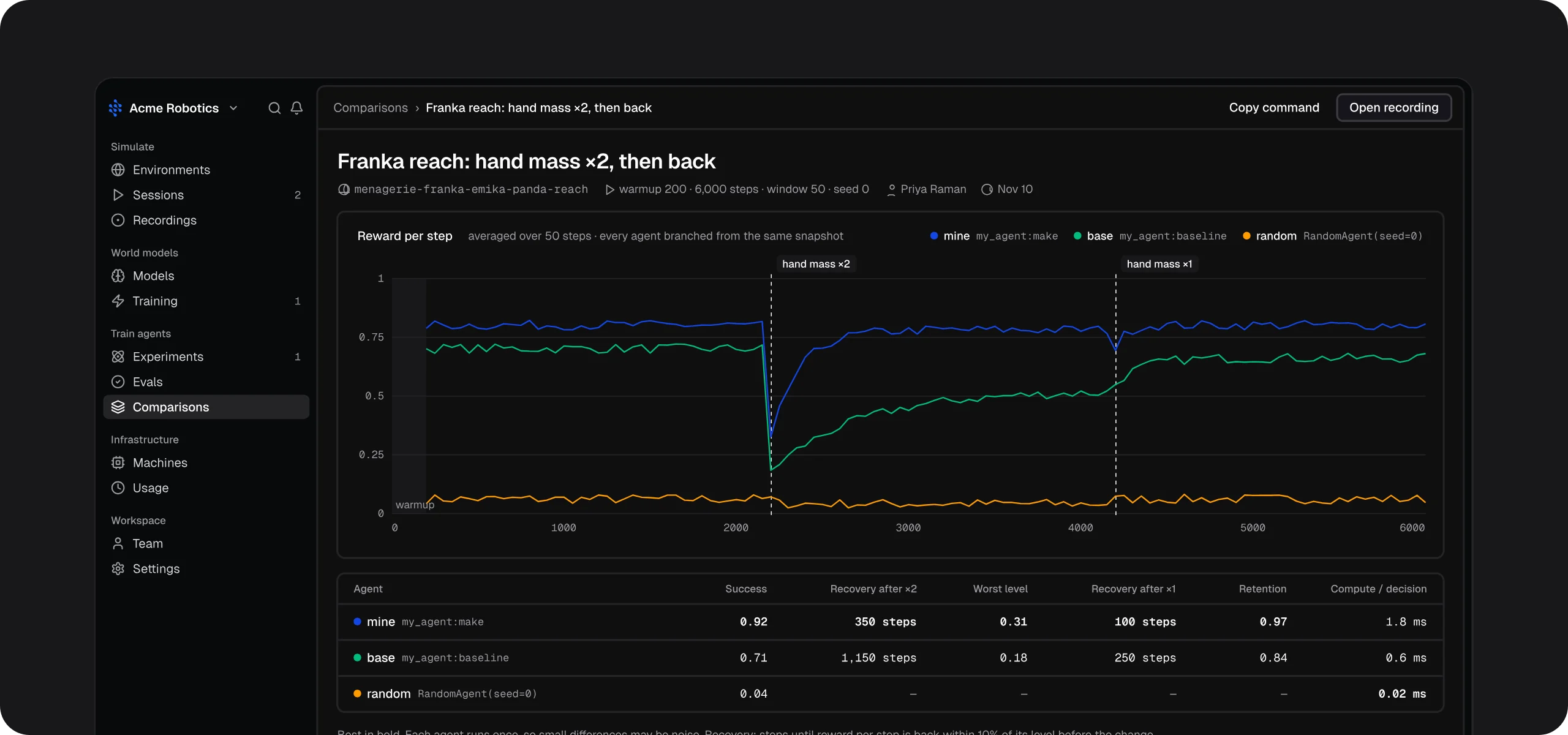
Fail as often as it takes
Let an agent crash ten thousand times. Nothing gets damaged, and nobody has to reset it.
Practise while you sleep
A learned world doesn't need a lab, an operator or a weekend off.
Begin with what you have
A few hours of footage from your environment is enough to start.
The platform
One platform, from recording to result.
Everything between a recording and a trained agent, on machines you already own.
01Simulate
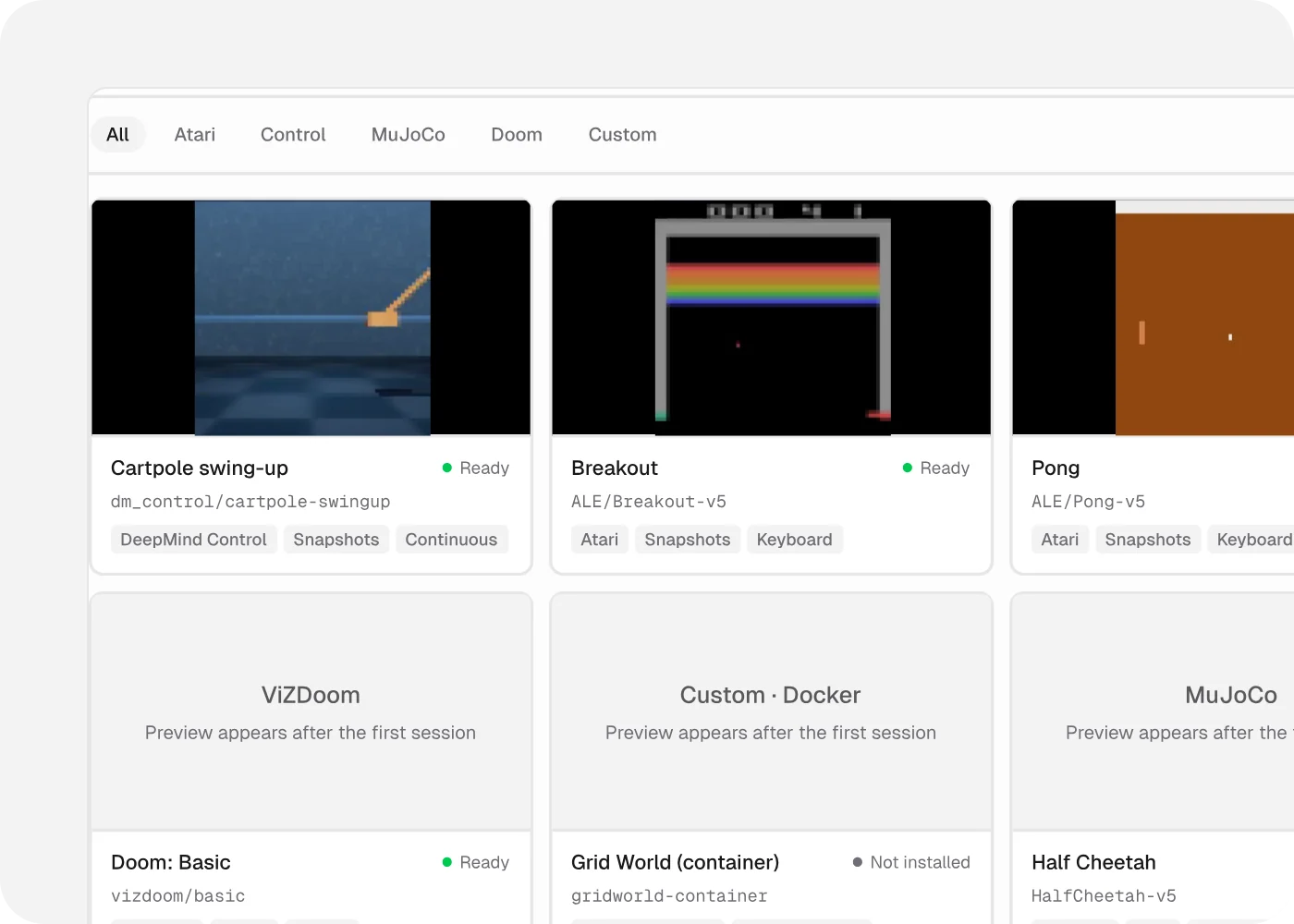
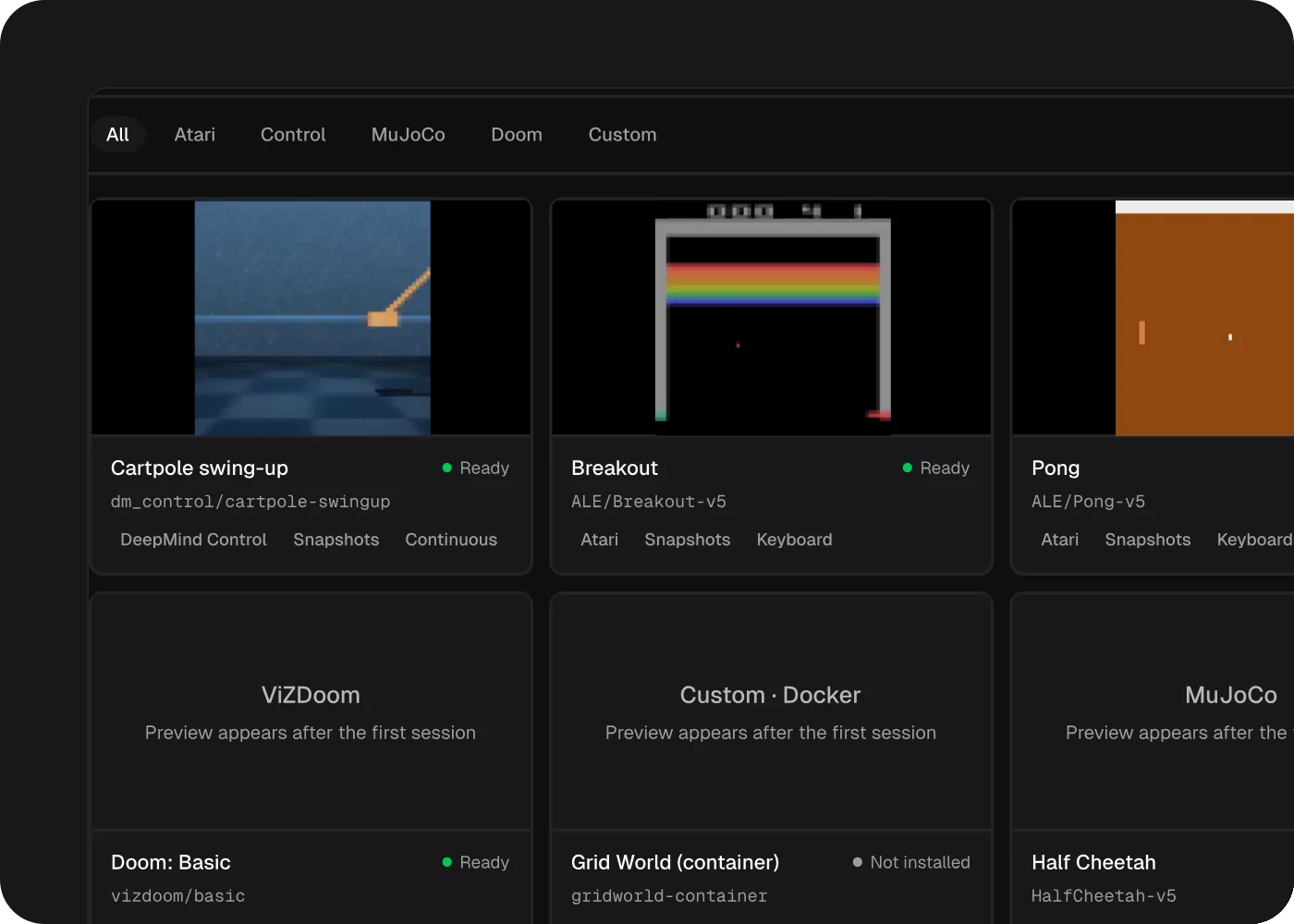
Play any environment, live.
Start an Atari game, a MuJoCo robot or your own simulator in the browser. Take the controls, change the world mid-episode, and every episode is saved.
02Learn
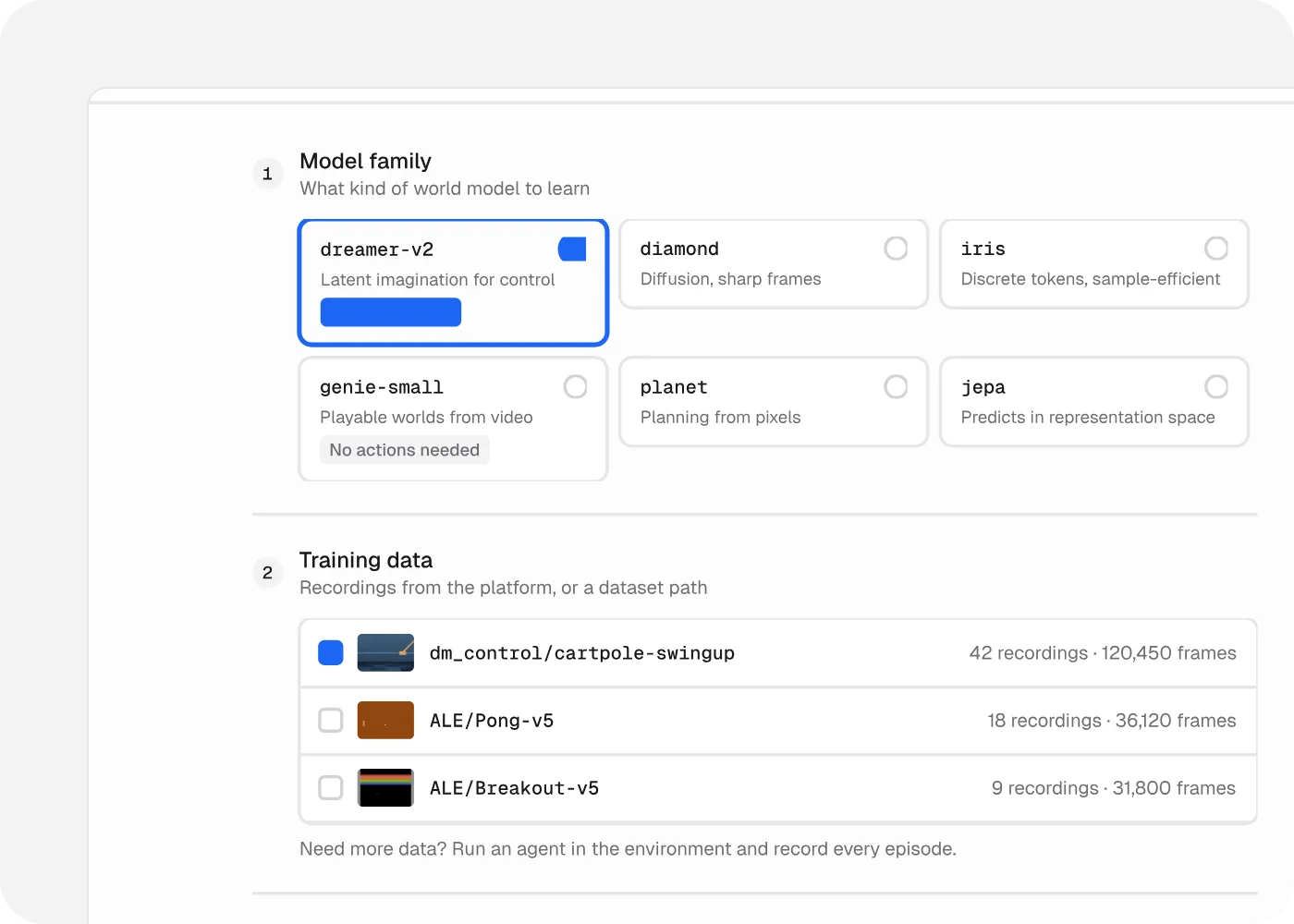
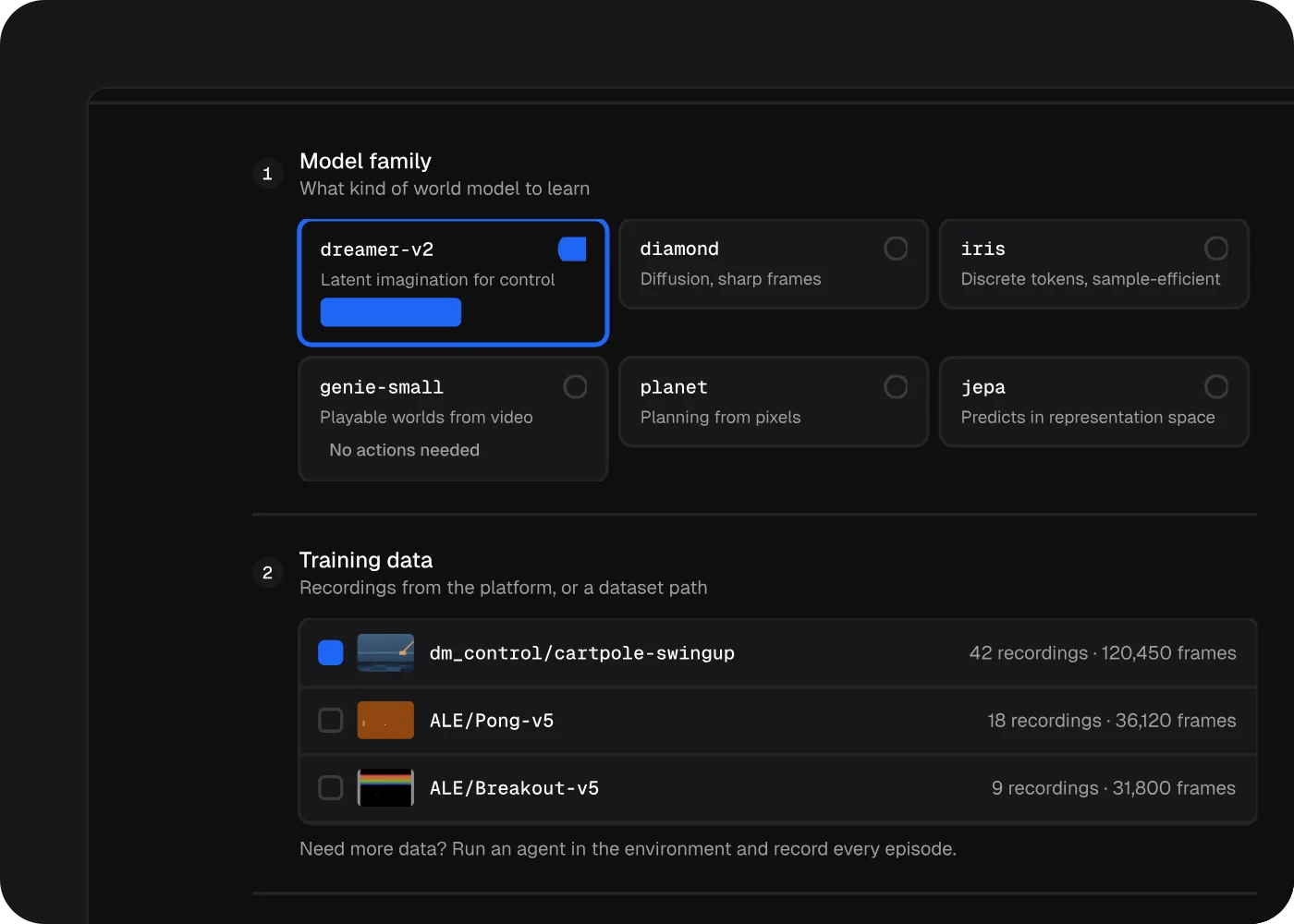
Turn recordings into a world model.
Pick a model family and the recordings to learn from. Training runs on your GPUs, and you can step inside the result when it is done.
03Train and test
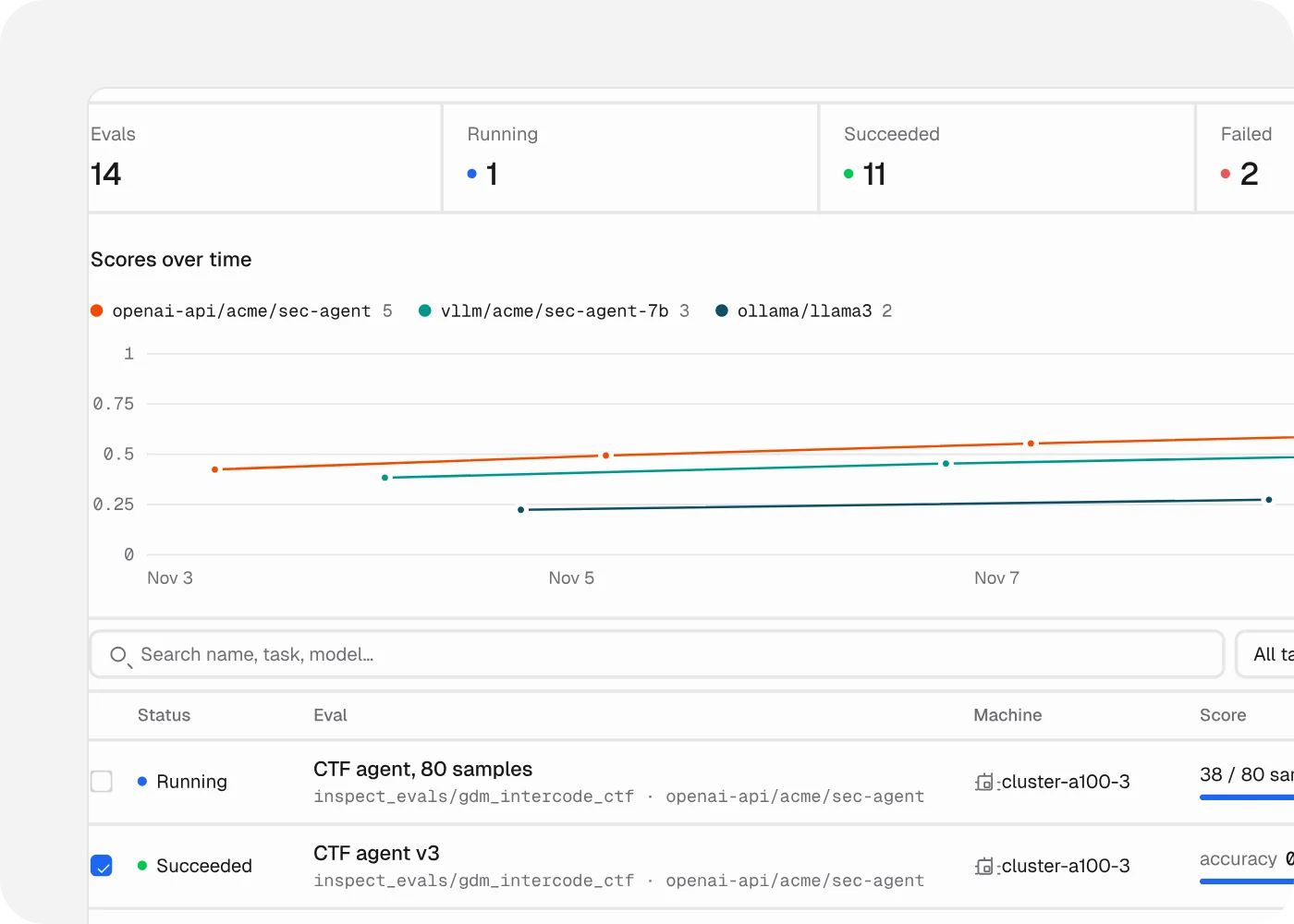
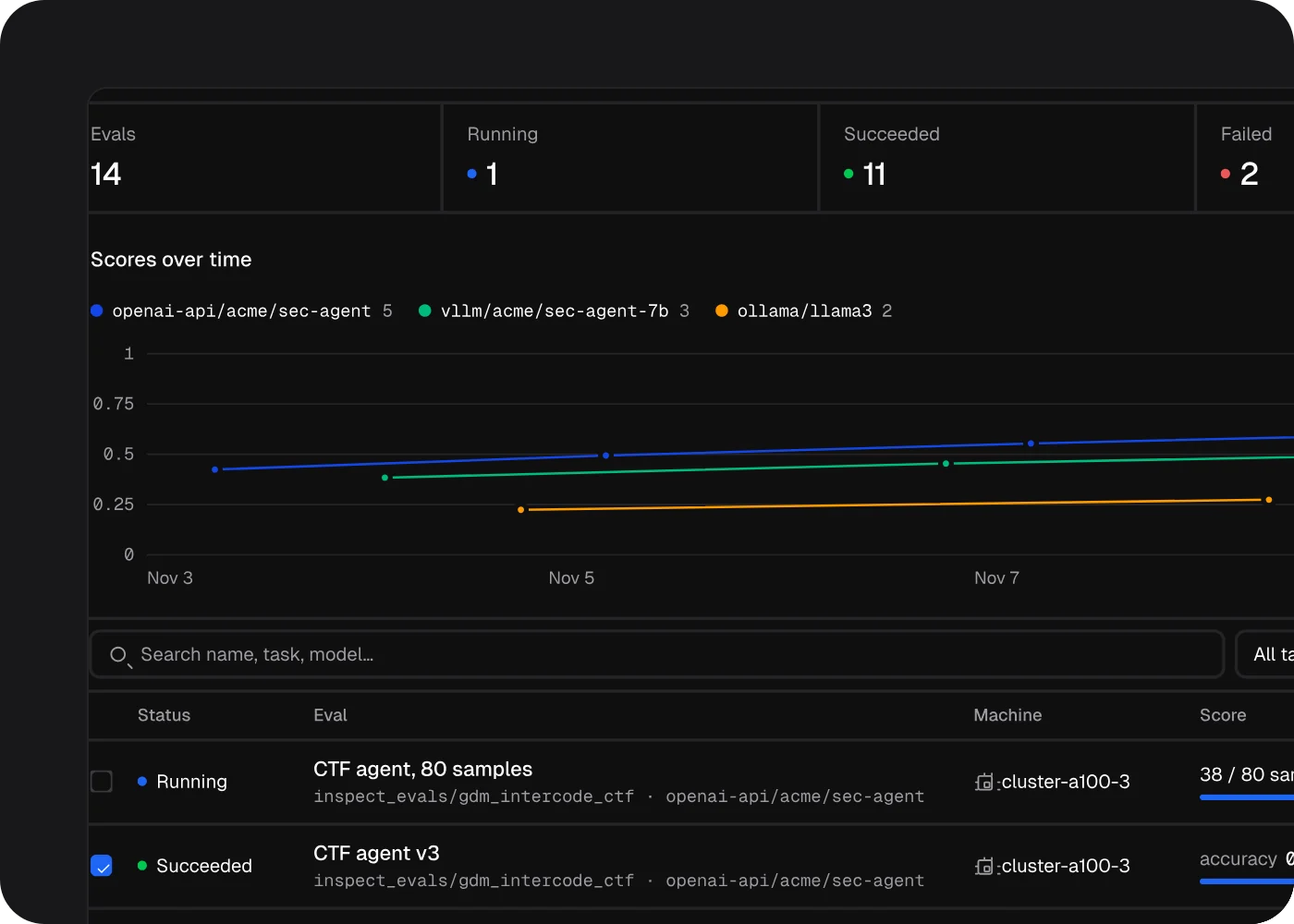
Train agents and measure them honestly.
Run experiments and Inspect evals on the same machines. Compare versions side by side and see exactly where each one falls short.
04Run it yourself
Your machines, your data.
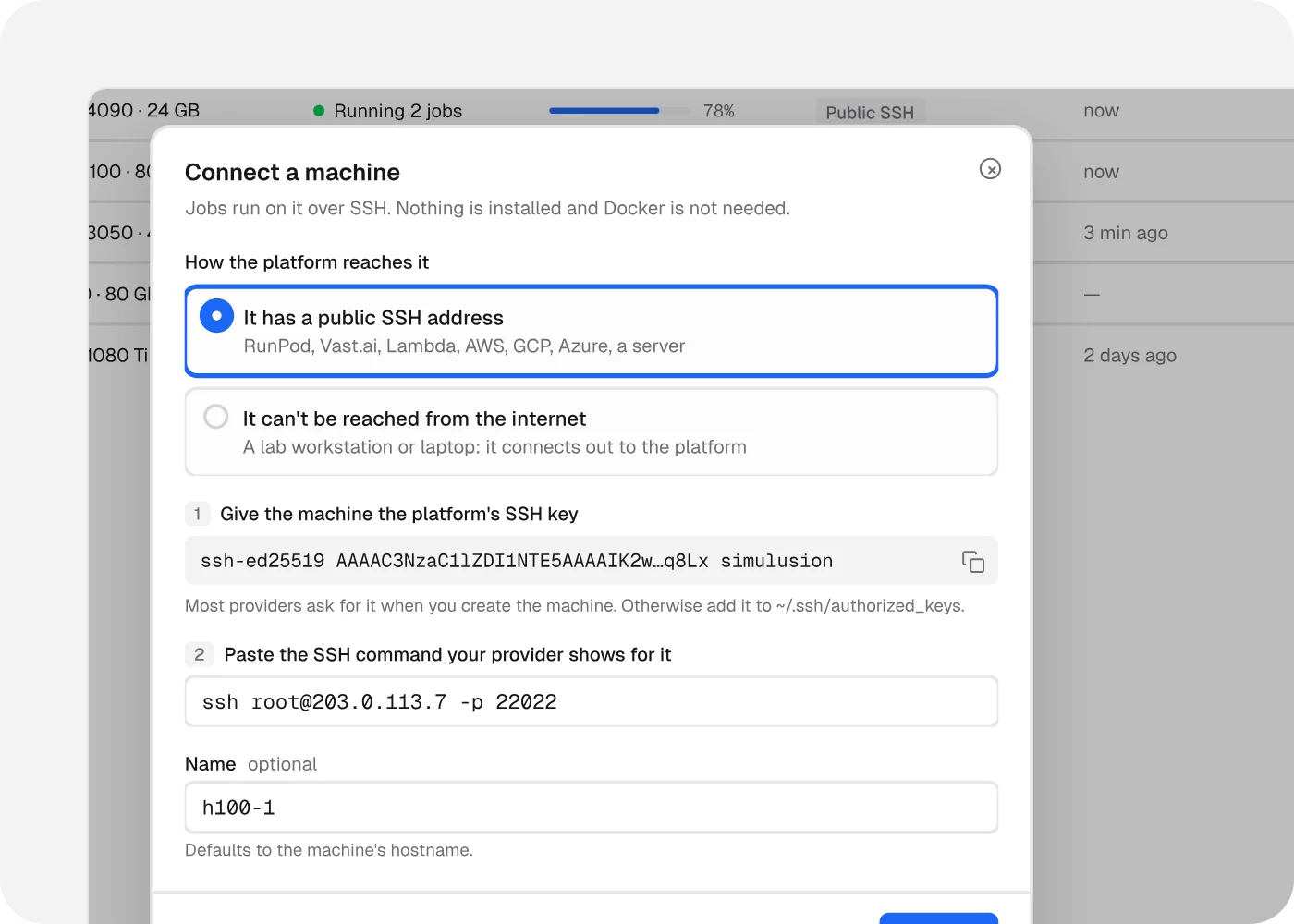
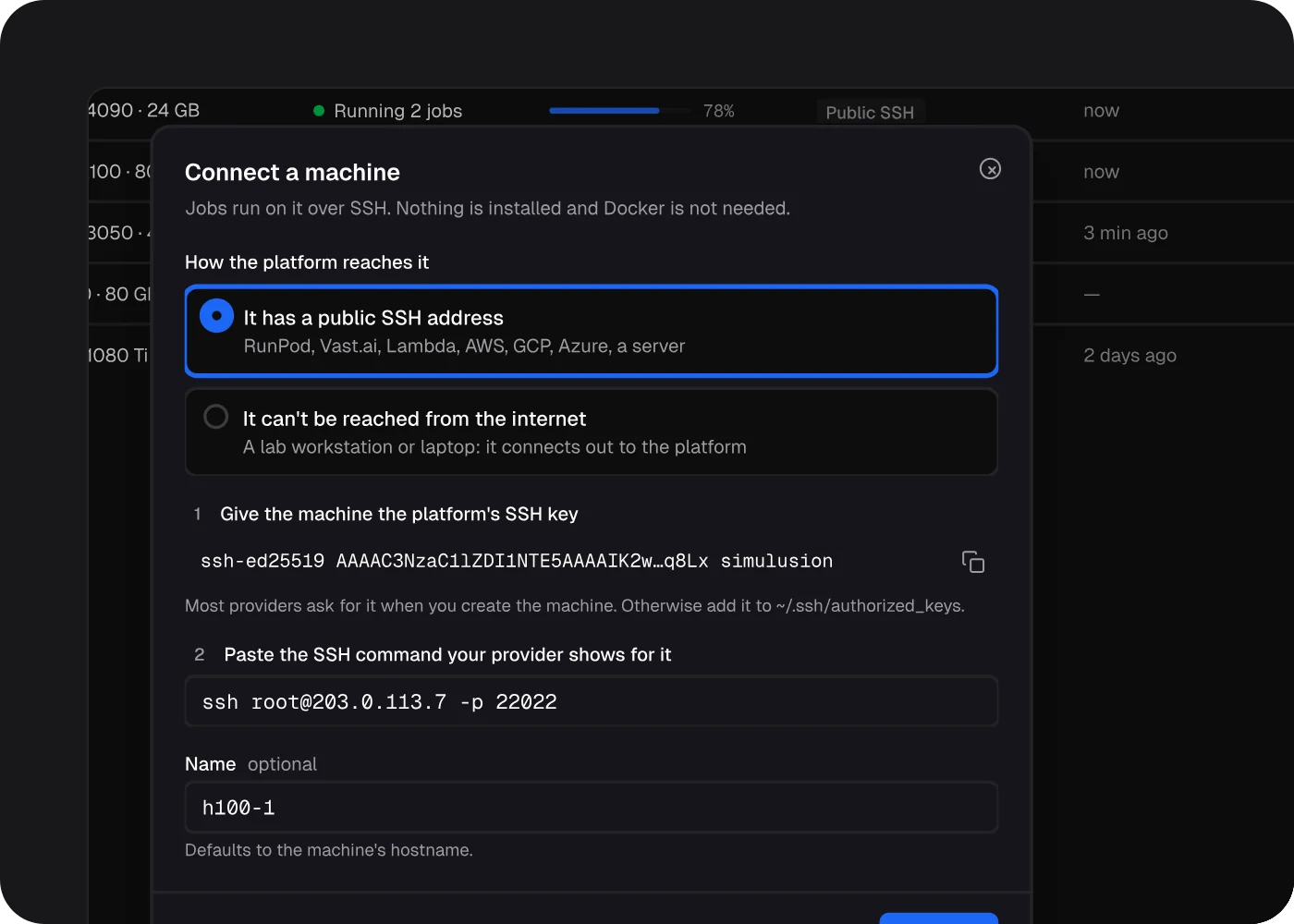
Connect GPU machines over SSH or a reverse tunnel, and your agents train on them. For proprietary data, self-host the whole platform: nothing leaves your infrastructure.
05Research
Measured, not claimed.
Every number comes from a run you can reproduce with the open-source library.
Cartpole swing-up, evaluation return out of 500
- Dreamer60k steps60k steps75 to 493
- PlaNet75 min75 minutes76 to 435
- DreamerV260k steps60k steps75 to 250
Start with the recordings
you already have.
The library is free and open source. The platform runs hosted, or on your own infrastructure.